Take vs. Bring for Kids
Take moves a person or object from the current place to another; bring moves it toward a person or chosen place. Take vs. Bring for Kids: A Practical Guide teaches this direction rule through examples, sentence patterns, errors, and practice. Children need to picture the starting point, destination, and relevant viewpoint, not memorise long definitions. Those points determine the verb. Older children can explore shifts in viewpoint.
📥 Take vs. Bring for Kids: Viewpoint Practice Pack
Find the viewpoint, follow the movement, and choose the right verb.
Leave your email — we'll send the PDF to your inbox.No spam — the PDF plus one short reminder. Unsubscribe anytime.
The Idea Children Need First
Place a book beside your child. Ask them to move it away from you: “Take the book to the table.” Stand by the table and say, “Bring the book to me.” The route stays unchanged; the speaker’s position selects the verb.
For children, a direction line works well: take = here to there, while bring = there to here. “Here” may mean the speaker, listener, meeting point, classroom, or event chosen as the centre.
Take vs. Bring for Kids: A Practical Guide makes that centre visible. Before choosing, ask, “Where is the thing now?” and “Where is it going?” Direction answers beat word-for-word translation.
Two direction corrections
Myth: Take means holding something in your hand.
Fact: You can take a bag, a child, a bus, or an idea elsewhere.
Myth: Bring means travel toward the speaker alone.
Fact: Bring can point toward the listener or another chosen centre.
How Viewpoint Determines the Verb
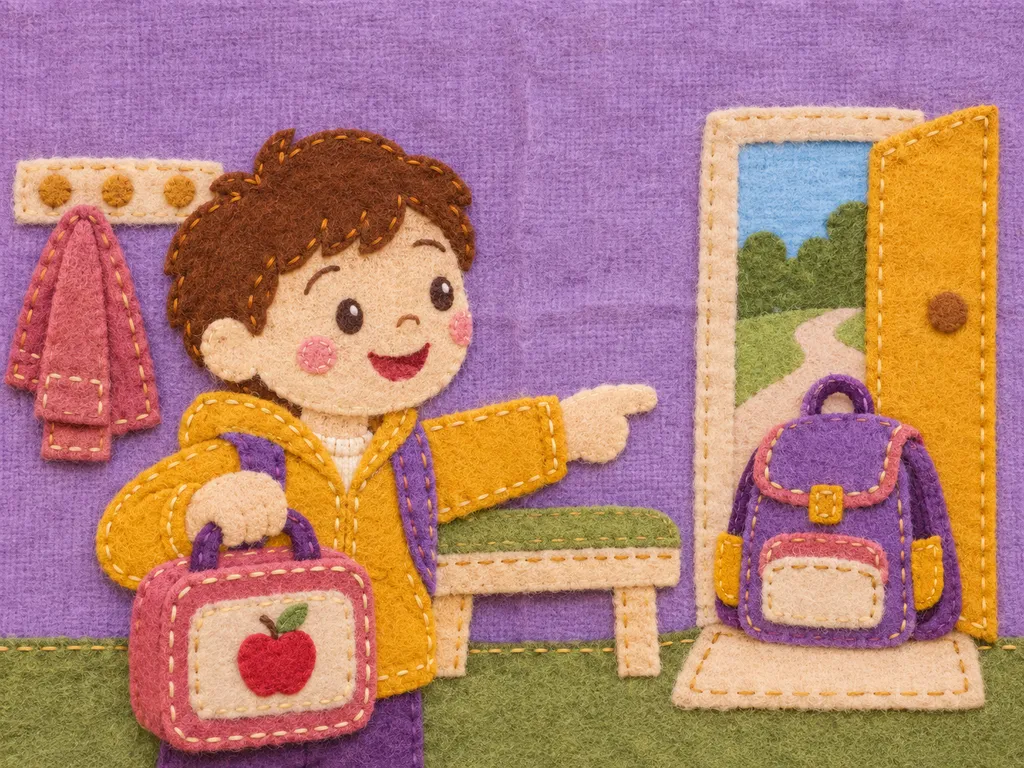
Imagine a parent speaking at home: “Take your lunch to school.” Home is the starting point; school lies elsewhere. Across LearnLink lessons, our tutors help children build confident, everyday English step by step. School becomes the centre, so bring fits.
Take vs. Bring for Kids: A Practical Guide uses direction, not distance. A short walk can require take; a journey across countries can require bring. The object travels away from a starting viewpoint or toward a chosen person or place.
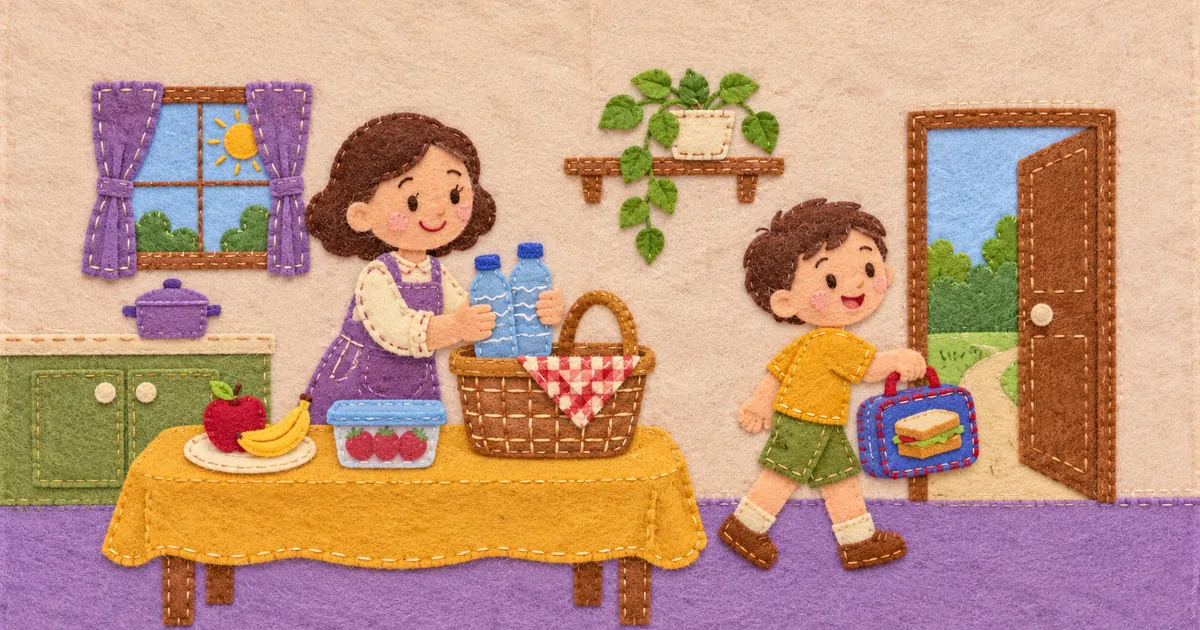
Both verbs may fit when speakers picture an event differently. Before a family picnic, one person might say, “Take water to the park.” Another might say, “Bring water to the picnic.” The first follows water from home; the second looks toward the event.
Use a direction check. Ask your child to point to the starting place and destination before choosing take or bring.
Useful Sentence Patterns
Take vs. Bring for Kids: A Practical Guide places the object beside the verb. The core form is verb + object + to + destination: “Take the coat to your room” or “Bring the coat to the door.” A person can be the object: “Take your brother to class.”
For a person as destination, children may say “Bring me the book” or “Bring the book to me.” Both are correct. The irregular past forms are took and brought.
The table offers a first choice, not a strict ban. A destination may become the centre when the speaker, listener, or group plans to meet there.
Four ways to make the contrast visible
- Doorway switch Give the instruction from opposite sides of a doorway.
- Two-place sketch Draw arrows between home, school, and another meeting place.
- Message relay Change the verb when the speaker changes location.
- Past-tense pair Match take with took and bring with brought.
Common Mistakes and Clear Fixes
Children may choose by object: bring for a school bag but take for food. Objects do not decide. Mark the route: “Take your bag from home to school” and “Bring your bag to the teacher.”
Another error is forming regular past tenses. Standard English uses “We took the books,” not “We taked the books,” and “We brought the books,” not “We bringed the books.” Practise short pairs: “Today we take it; yesterday we took it. Today we bring it; yesterday we brought it.”
When reviewing Take vs. Bring for Kids: A Practical Guide, separate carry. Carry means supporting or holding an object in transit; it does not mark viewpoint. A child can carry a box while taking it elsewhere or bringing it to a parent.
Practice at Home or in a Lesson
LearnLink tutors can practise the contrast through physical action, pictures, and short exchanges. At home, choose a pencil, cup, coat, or toy. Give an instruction, let your child move the object, then switch places.
Ask an older child for a reason. “Bring is correct because the folder moves toward the office where the speaker waits” demonstrates stronger understanding than a one-word answer.
Choose Take or Bring
Complete each sentence.
1. You are leaving home: “___ your project to school.”
2. Your parent is waiting by the door: “___ your shoes to me.”
3. You are in the kitchen: “Please ___ these cups to the dining room.”
4. Your tutor is waiting online: “___ your workbook to the desk.”
5. You are leaving the park: “___ your ball home.”
Answers: 1. Take; 2. Bring; 3. Take; 4. Bring; 5. Take.
Check each answer by naming the sentence’s centre. If another answer fits, move the speaker and explain how the new viewpoint changes the verb.
Change the Viewpoint
Rewrite each instruction for the new speaker.
1. At home: “Take your reading book to class.” Across LearnLink lessons, our tutors help children build confident, everyday English step by step.
2. In the garden: “Bring the ball to me.” A person inside the house says: “___ the ball to the garden.”
3. Today: “We take snacks to the club.” Change the sentence to yesterday.
4. Today: “They bring their games here.” Change the sentence to yesterday.
Answers: 1. Bring; 2. Take; 3. We took snacks to the club; 4. They brought their games here.
When a word has several meanings or pronunciations, Cambridge Dictionary is a useful check before turning it into child-friendly examples.
Frequently Asked Questions
Can Take and Bring Both Be Correct in One Situation?
Yes. A speaker may treat the listener, destination, or event location as the centre. That makes bring natural before the speaker arrives. Take vs. Bring for Kids: A Practical Guide supplies a dependable first rule, but context matters. Ask, “Toward which person or place is the object moving?”
How Can I Explain the Difference to a Young Child?
Mark two spots and choose a familiar object. From the first spot, ask your child to take the object to the second. Move there and ask them to bring it to you. Repeat with new objects, then exchange roles. Physical movement reveals the viewpoint.
What Are the Past Forms of Take and Bring?
The past form of take is took; the past form of bring is brought. Practise linked sentences: “We take lunch to school every day. We took lunch yesterday.” Then: “We bring books here every week. We brought books here last week.”
Does Carry Mean the Same as Take or Bring?
No. Carry describes how a person moves something by holding or supporting it. Take and bring relate direction to a starting point or destination. A child might carry a heavy bag while taking it to school, then bring it to a parent waiting at the door.
Should a Multilingual Child Translate These Verbs?
Translation can suggest a rough meaning, but languages express direction differently. Mark an arrow, starting point, and destination before comparing languages. Your child then builds the English viewpoint directly while drawing on their other languages.
Want to see how these ideas work in a real lesson — try a LearnLink trial lesson.
Stay updated on our latest tips and resources by following us on Instagram LearnLink.